
Djibouti & “Afar Triangle”
a cradle of human evolution
Head of vast continental rift
Overview of the 'Afar Triangle' Region
The 'Afar Triangle' is a region marked by significant seismic activity, where annual earthquake events are meticulously monitored and analysed by scientists to better understand the underlying geological processes driving this activity.
The Afar Triangle, also known as the Afar Depression, appears visually as a light grey triangular area (see figure 2) at the head of the expansive 3,000-kilometre East African Rift. This rift enters the Afar Depression at its southwest corner, forming a prominent geological feature in the region.
Today, the Afar Depression holds the distinction of being the hottest place on earth for year-round temperatures. Historically, it may have been the cradle of humanity, but it is now recognised as a 'hotbed' for earthquake activity, as demonstrated in Figure 2.
The reason for this concentration of earthquakes is its position at the junction of three tectonic plates—the Arabian, Nubian (African), and Somalian plates. This location contains the Afar Triple Junction, which is situated at latitude 11.30 and longitude 43.00, approximately 35 kilometres southwest of Djibouti City. Notably, all three major earthquakes (magnitude 6.2–6.5) between 1989 and 1992 occurred within 140 kilometres of the Afar Triple Junction (see Figures 3–4), and Figure 2 highlights a strong clustering of large events around this point.
The three arms of the Triple Junction—the East African, Red Sea, and Aden Rifts (Figure 3)—are said to diverge at near-perfect 120-degree angles from each other. Despite this geometric arrangement, the primary focus is on identifying the locations where the most significant earthquakes occur.
Most of the important earthquakes in this region are confined to the Afar Triangle (aka the Afar Depression): their spatial and temporal distribution, as well as population dynamics, are the central subjects of this investigation. The goal is to develop practical early forecasts of large seismic events, with the aim of safeguarding lives and property.
Figure 1.
Sequence of Major Earthquakes
Figure 1 illustrates the sequence of the largest annual earthquakes recorded since 1989 within the 'Afar Triangle' and its surrounding areas, as defined by specific geographic coordinates. This sequence offers valuable insights into the temporal changes and patterns of seismic activity across the region.
Analytical Modules and Ecological Model
Seven distinct yet interconnected Analytical Modules have been utilised to estimate the magnitude of the anticipated mainshock in 2026. Each module assesses earthquake dynamics and occurrences from a unique perspective, collectively contributing to a broader Ecological Model or Theory. Importantly, all modules deliver remarkably similar forecasts, underscoring the robustness of this analytical framework.
The M 4.3 mathematically critical precursor (PC) of 2016 is shown on the attached Google Earth image as just offshore of Djibouti and close to the M 5.4 foreshock of 2024. The general overall decline in the size of annual events between the mainshock of 1989, and the lowest point (the CP M4.3 of 2016) was significant (p <0.018), and the rapid rise following the 27-year decline is obvious, if not somewhat ominous.
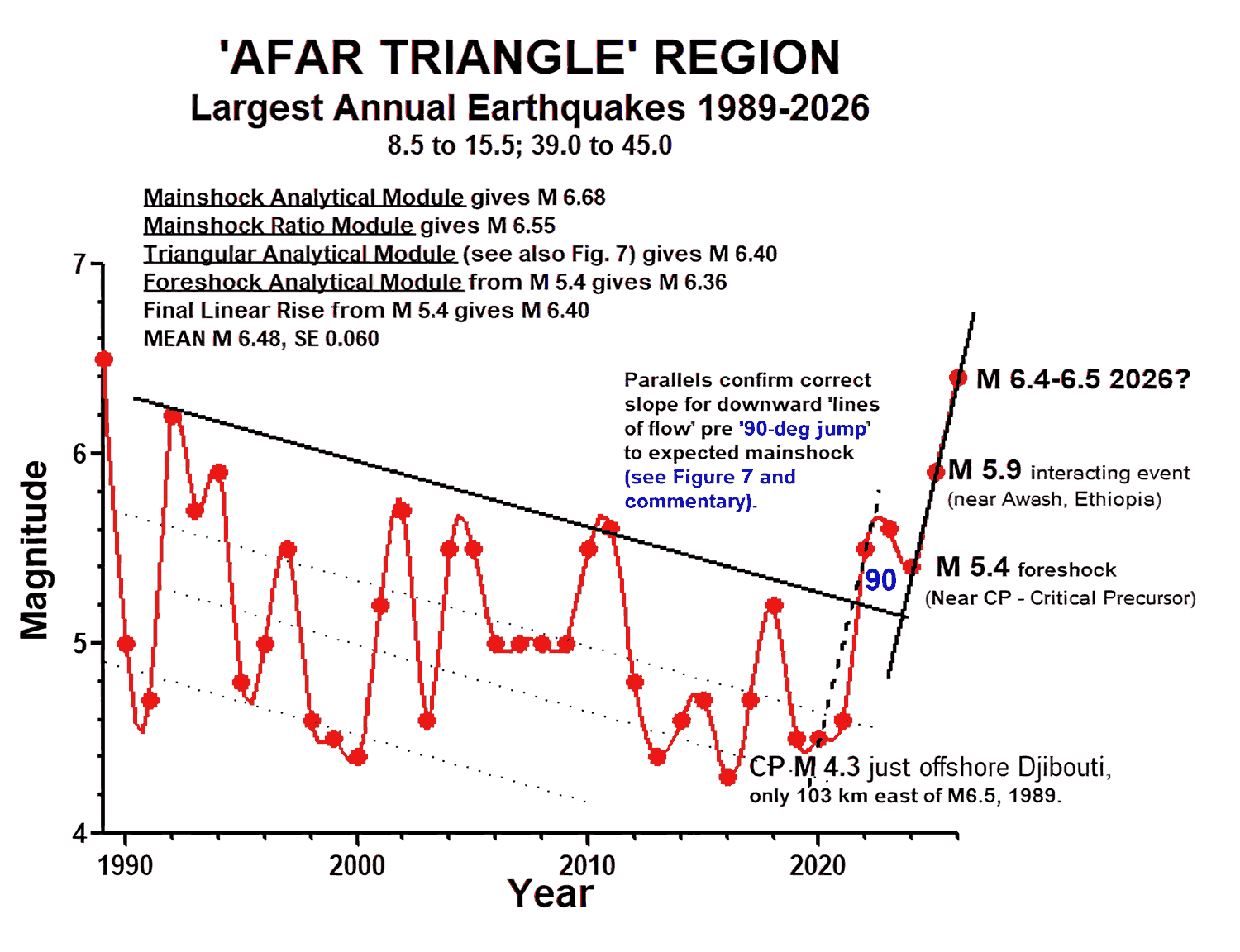
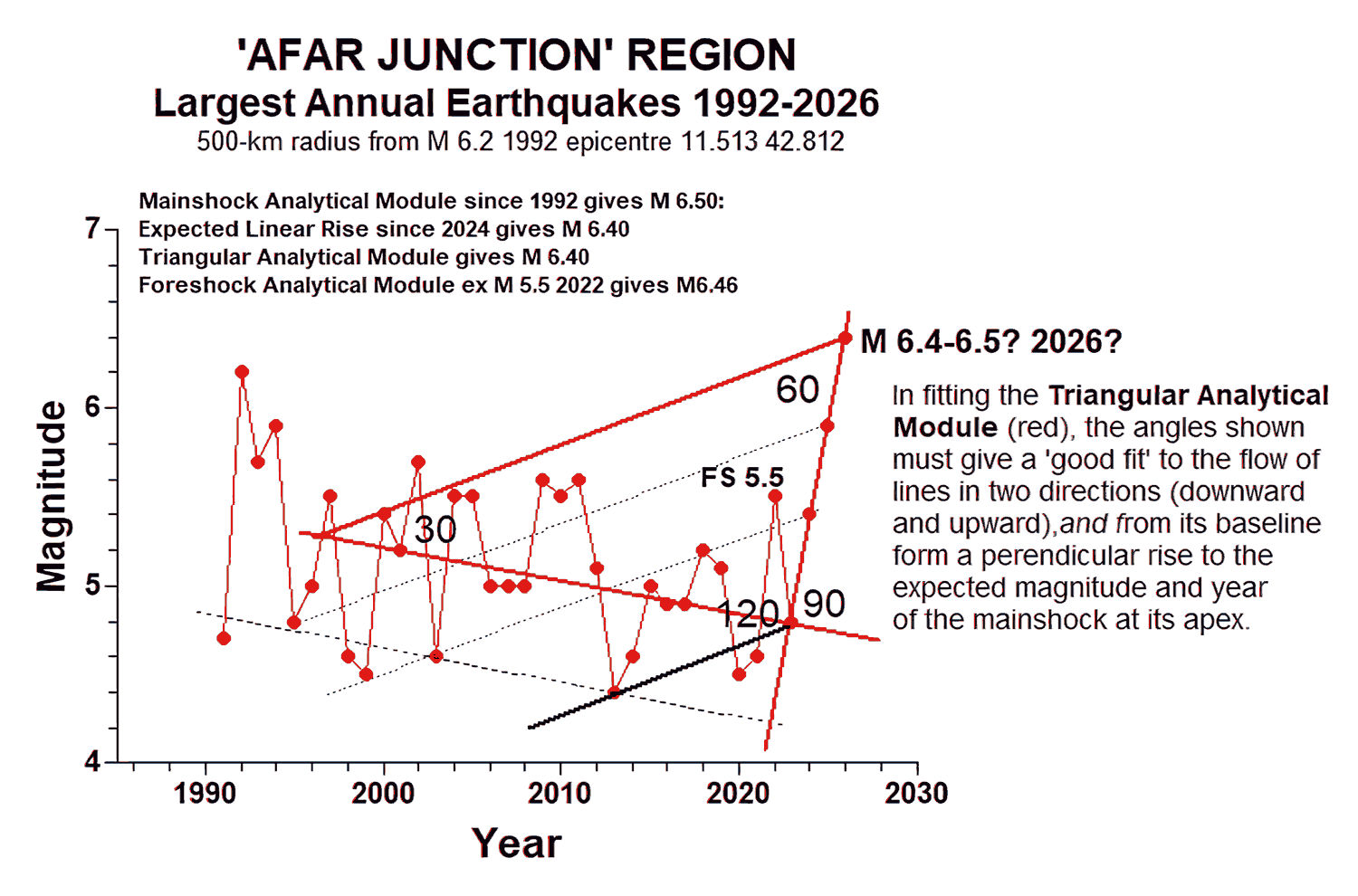
Figure 1b: Comparative Earthquake Sequence Analysis
Comparison with Afar Triangle Region
By comparison with the larger rectangular ‘Afar Triangle’ Region (as shown in Figure 1), this graph presents the sequence of the largest annual earthquakes within a smaller, circular region measuring 500 km in radius, centred on the M 6.2 event of 1992, which occurred just 38 km west of Djibouti City. This comparison highlights the robust nature of the Mainshock Analytical Module, which provides very similar forecasts for the next mainshock.
Critical Precursor and Triangular Module Fitting
In this second graph, the mathematically Critical Precursor (CP) was a M 4.4 earthquake in the Red Sea on 10/05/2013, approximately 368 km north of Djibouti City. The final 90-degree jump point was a M 4.8 event, located just 86 km east of Djibouti City.
It is important to note that the fitted Triangular Analytical Module does not operate independently. Therefore, even if it appears to fit a dataset, this does not necessarily indicate that a mainshock will occur at its apex—the point which represents a specific magnitude and expected time of occurrence. However, the corollary applies: if the module does not fit the data, the forecast is incorrect. This observation holds for retrospectively tested mainshocks, and the module’s application is currently being evaluated in a prospective context.
“Seeking when of an earthquake will hit is akin to forecasting a cyclone's landfall — the twists and turns need re-assessment”
This event is certainly imminent, but when?
(answered via the author’s specialised timing models)
Now expected Mid-April, 2026, around Apr 18
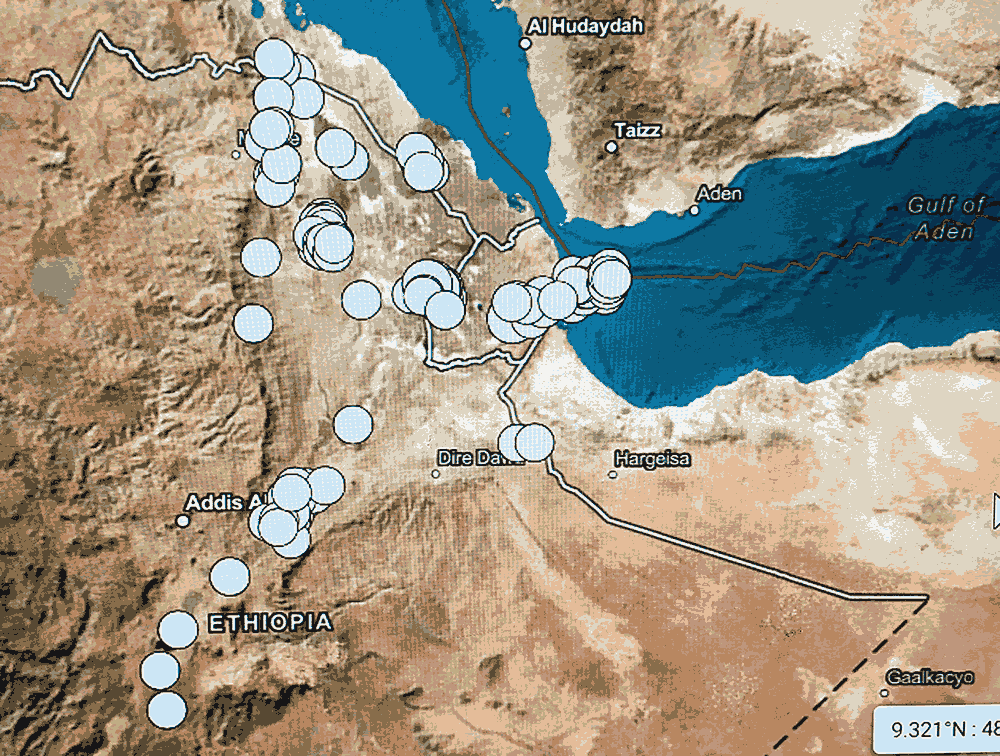
Figure 2.
This USGS Earthquake Search image shows the distribution of 123 M 5.0 and greater events since 1989 in the Afar Triangle region which is also known as the ‘Afar Depression’ by earth scientists. Mouse-over figure 2 →
(https://en.wikipedia.org/wiki/Afar_Triangle).
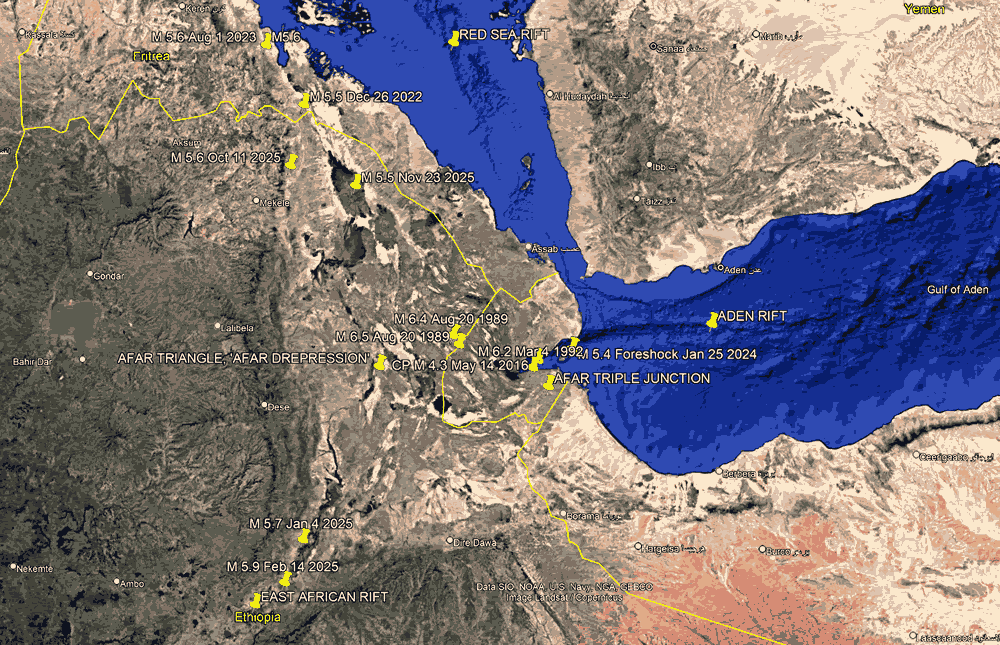
Figure 3.
This image of the Djibouti region shows the locations of important earthquakes relative to both the 1989 M 6.5 mainshock and the current expectation for M 6.4-6.5 earthquake within around the next 30 days [this update as of Apr 15, 2026]. The view shows mathematically-critical precursors (CP) and foreshocks for both periods which are all offshore and close to Djibouti City, in the nearby Gulf of Tajura (see Fig. 4). Whereas all M 6 events are on land within 100 km of the coast. The CP events for both periods are of a very similar magnitude, as are the foreshocks. The next mainshock is also expected to match that of 1989”. [credits to Google Earth Pro and USGS Earthquake Catalogue].

Figure 4
This closer view of Djibouti shows more clearly the relative positions of important precursors and foreshocks preceding the mainshocks, as already outlined for Figure_3.
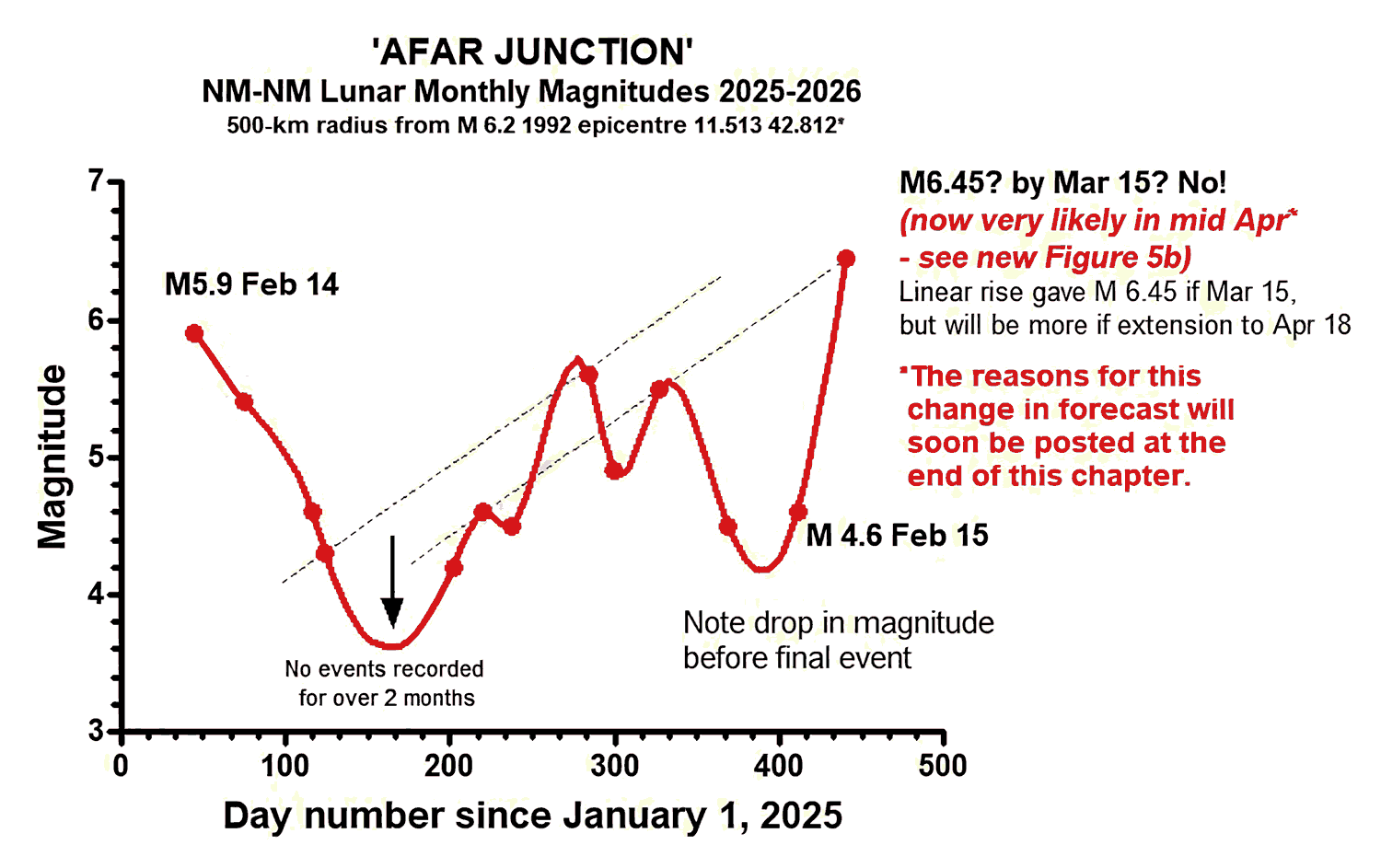
Figure 5.
A Lunar Monthly Module showing the sequence of largest monthly magnitudes between New Moons [NM-NM] since Feb 14, 2025, in the Afar Triple Junction region within a radius of 500 km from the M 6.2 earthquake of 1992 near Djibouti City.
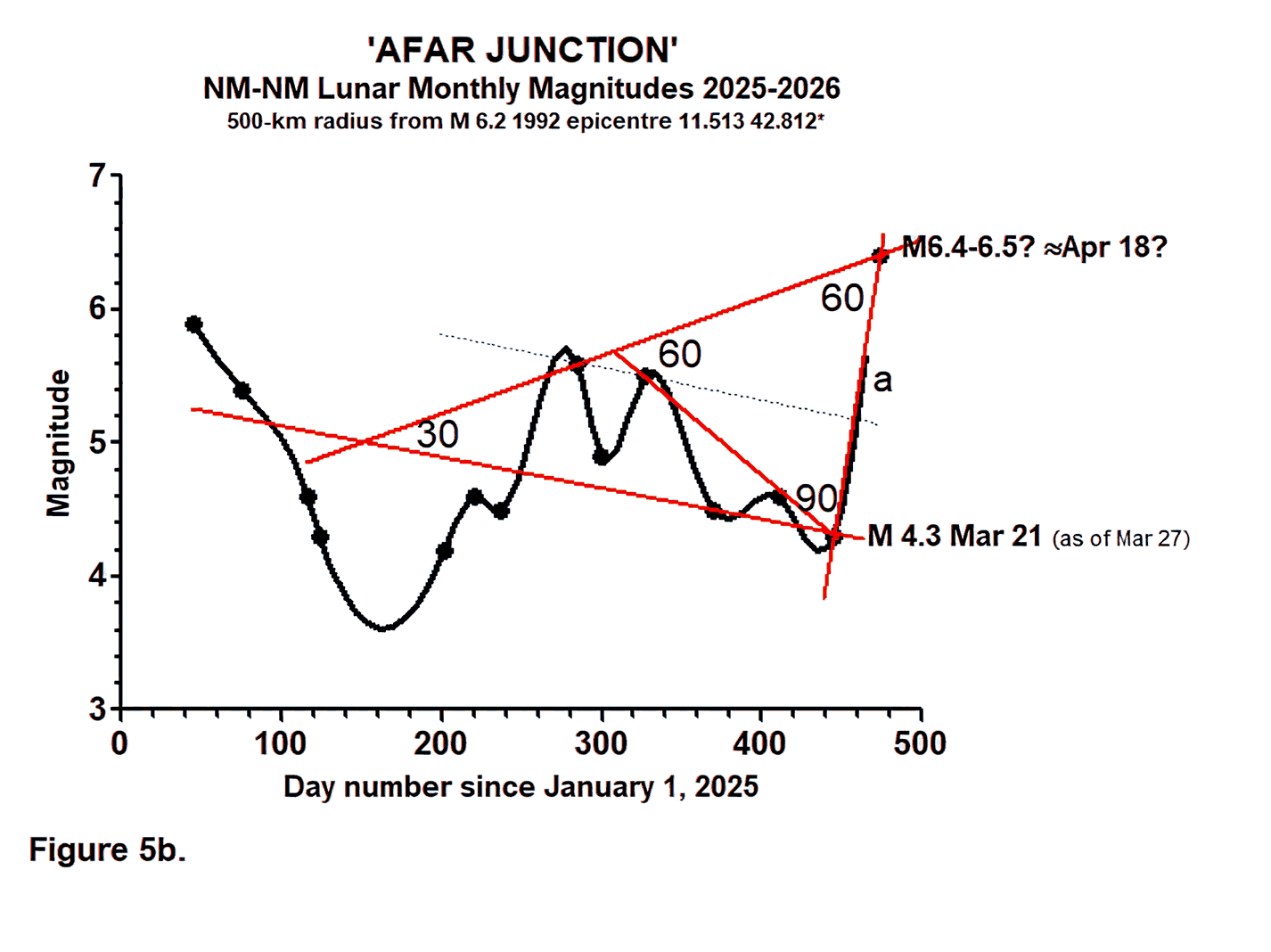
Figure 5b.
This graph gives the latest update of events since Figure 5 (above-left) and provides an overlay of the Triangular Analytical Module (red) which supports the very likely occurrence of the forthcoming mainshock on about April 18.The M 4.3 on Mar 21 took the previous graph to a further unexpected low point prior to a perpendicular rise to the anticipated mainshock, and this was a major reason why the previous forecast was over a month early. Also, the fitted triangle now gives a perfect fit for the size of side (a) and a perpendicular rise from the triangle baseline, which increases the likelihood of this new forecast being correct.
Monthly patterns mirror annual patterns
It is intriguing to observe that the dynamics and interactions among the largest monthly magnitudes and their timing, as depicted in Figures 5, 5b, and 6 (and elsewhere in this website), appear to mirror those found within the broader annual patterns. Several central characteristics stand out in this comparison:
(1) The largest earthquakes, within their respective time periods, exhibit a remarkable level of parallelism, a feature the author consistently regards as one of the most significant indicators of symmetry within datasets. This pronounced parallelism not only highlights the intrinsic orderliness of the data but also reinforces the notion of strong homogeneity among these interconnected earthquakes.
(2) Another form of symmetry, or parallelism, is in the timing of large earthquakes: most mainshocks are preceded by a large earthquake, as here, with a M 5.9 prior to the mainshock on Feb 14, 2025, and an approximate M 6.45 mainshock now expected about Apr 18, according to the analytical timing module represented by Figure 6.
(3) Similar to the patterns observed in Figure 5, extended sequences featuring the largest annual or monthly events typically show a noticeable decrease in activity immediately after the initial major event. This lull is then succeeded by a gradual escalation, ultimately leading up to the next mainshock in the sequence. During the middle portion of the sequence characterised by lower magnitudes, there can be an extended period during which no events are recorded. For example, in Figure 5, there is a notable interval where no quakes are recorded. For example, in Figure 5, there is a notable interval where no tremors exceeding magnitude 3.8 were observed for a full two months.
(4) A pronounced lull or drop in recorded earthquakes often precedes mainshocks. Sometimes this results in the complete absence of recorded quakes (equal to or greater than M 4.0) for a long period leading up to the mainshock. A notable pattern emerges before the occurrence of a mainshock, where seismic activity experiences a marked decline. In many cases, event frequency drops significantly, sometimes resulting in a complete absence of recorded events during the final week leading up to the mainshock. For instance, prior to Japan’s M 9.1 earthquake, there was a one-month period with no quakes exceeding M 4.0 until the final week, underscoring the pronounced lull that often precedes mainshocks.
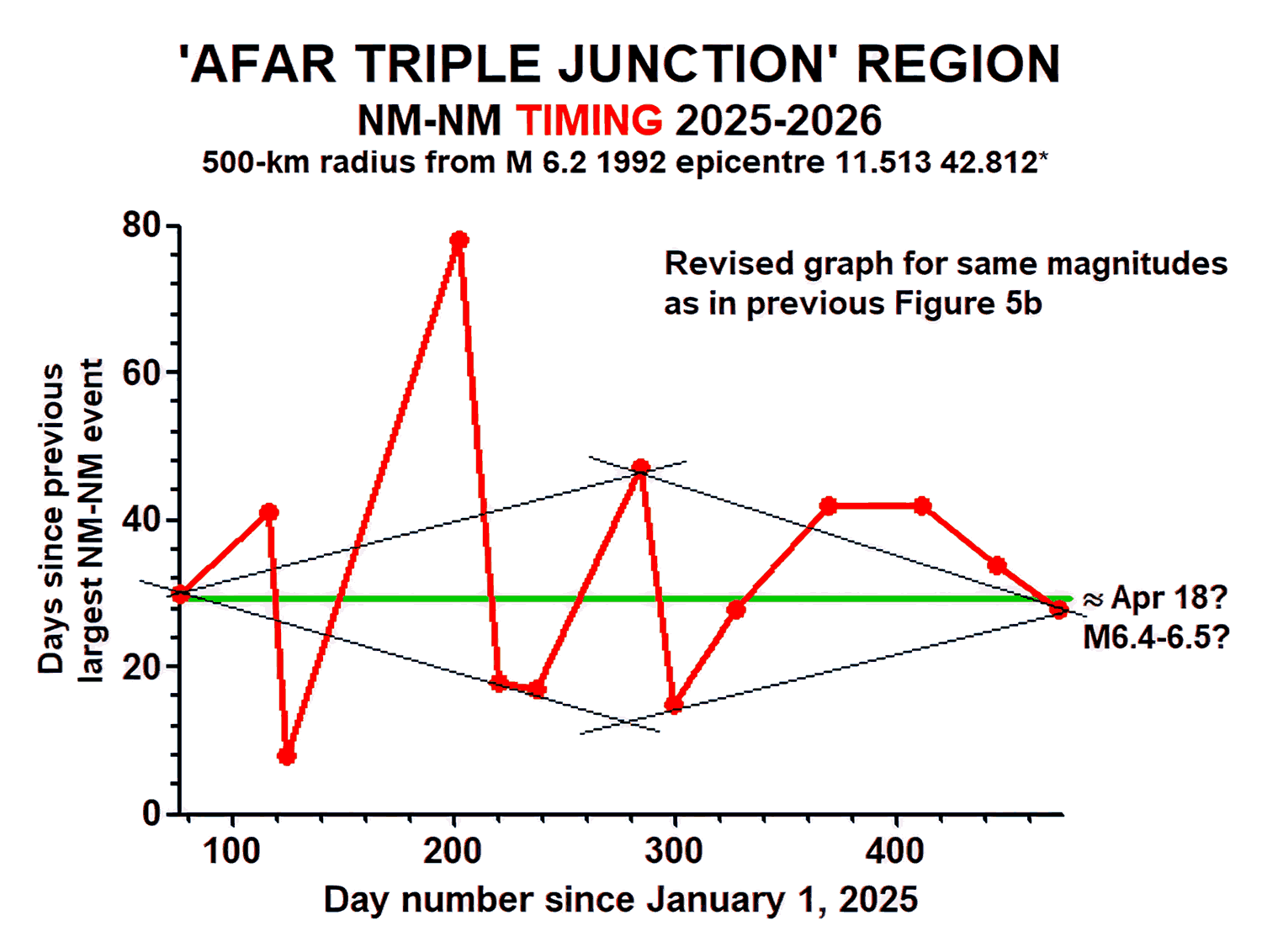
Figure 6.
This Lunar Monthly Timing Module analyses fluctuations in the time between largest monthly quakes, for the same lunar periods as in Figure 5b. Here the time interval between the largest consecutively monthly quakes is represented on the y-axis as the number of days since the previous largest New Moon-to-New Moon (NM-NM) event (Y-axis), while the actual day of each month's largest earthquake is shown on the X-axis. In this analytical module, the time between largest monthly earthquakes should oscillate about the lunar period which is approximately 29.5 days, and the values just prior to all mainshocks, should converge towards this mean value. The data in this analysis demonstrate such a convergence, suggesting that the anticipated mainshock may indeed occur on about Apr 18, 28 days after the previous largest earthquake. Parallelisms in the patterns of these quakes confirm this likelihood if the forthcoming mainshock falls on about Apr 18, and therefore this analysis is strongly supportive of that given in Figure 5b.
Figure 7.
The Triangular Analytical Module
& Mainshock Geometry:
‘The 90-degree Jump’
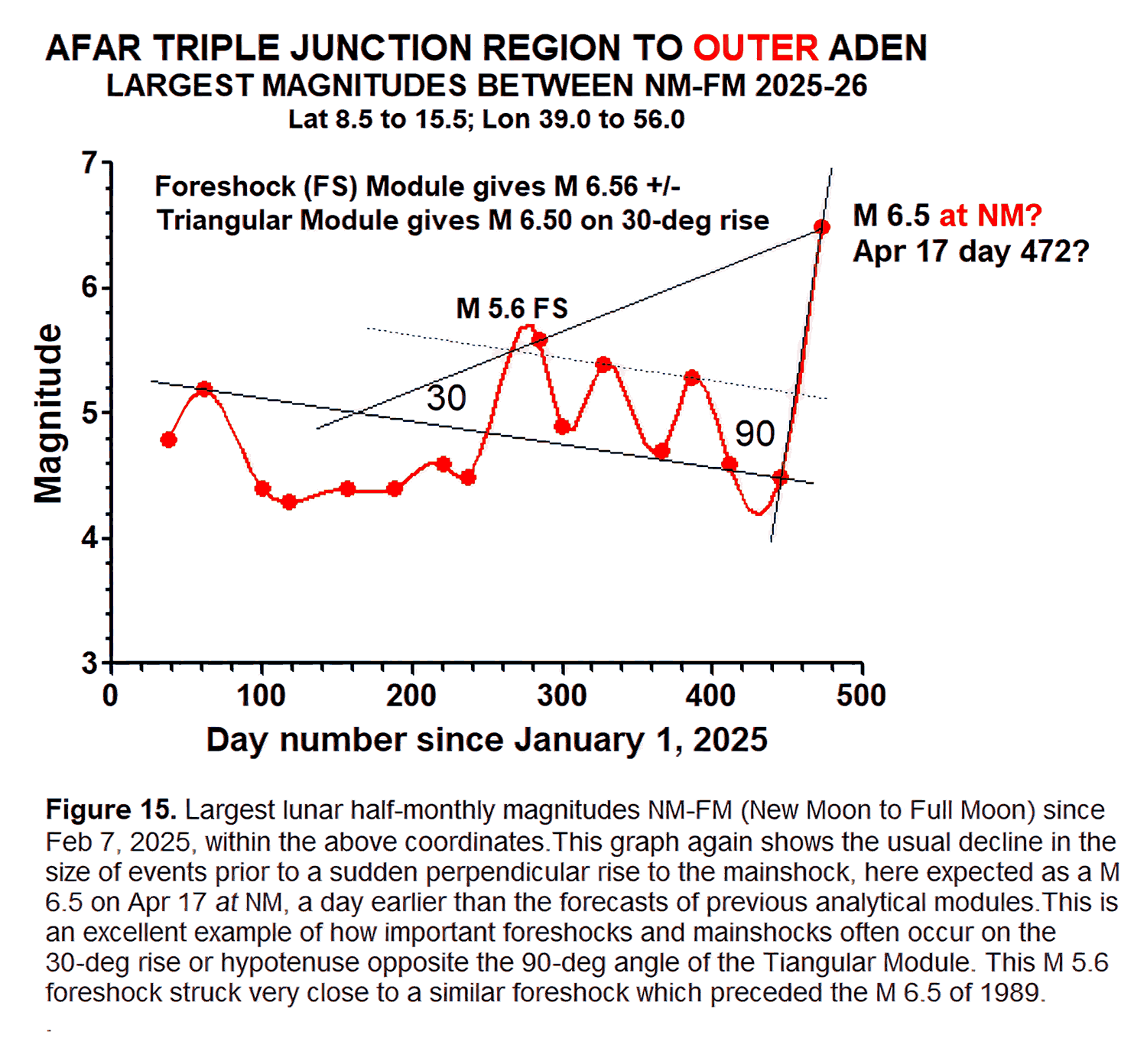
Mainshocks are characterised by a sudden large jump in size that is 2-3 magnitudes greater in size than the penultimate largest monthly or yearly event: a jump that occurs at about 90 degrees to a baseline or ‘line of fall’ representing the decrease from largest to lowest magnitude in the prior sequence of largest monthly or yearly earthquakes, as for the twelve months preceding Djibouti’s M 6.5 of 1989 (Figure 7).
This graph offers the clearest illustration yet of the author’s so-called ‘90-degree jump’ in mainshock geometry. More than thirty global mainshocks have now been re-examined for this intriguing and highly significant aspect of earthquake dynamics, with further insights to be highlighted on this website.
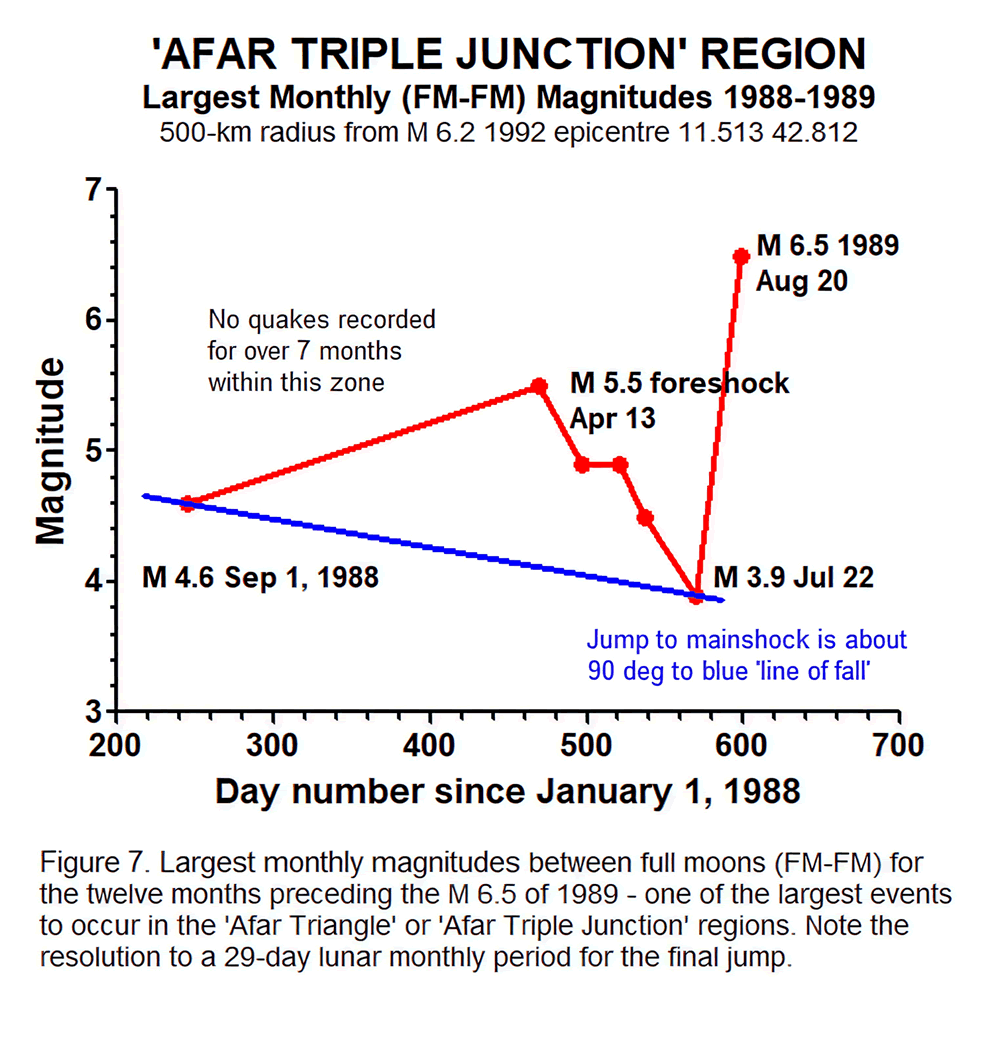
Figure 7 presents compelling graphical evidence of the underlying seismological processes. For instance, it reveals an extended seven-month period without any recorded quakes, suggesting that the rocks along fault lines were completely locked. Following this quiet spell, there was a notable decrease in large quakes over the ensuing three months. This pattern continued until the magnitude 3.9 event on July 22, which became the precursor to an unexpected surge in energy release—culminating in the M 6.5 mainshock on August 20, 1989, just 29 days later.
The ‘90-degree jump’ serves as both an additional forecasting tool and a means of cross-checking other predictive models, all of which must align on the expected magnitude and timing. Initially, the unpredictable nature of the 90-degree jump obscured its potential; however, by September 4, 2025, its geometric consistency became apparent, corroborating the forecasts produced by other modules for forthcoming mainshocks. Caveats relating to use of the '90-degree jump' are given on the page for the Triangular Module.
This website is dedicated to sharing the fascinating and revealing earthquake dynamics and behaviours that can be discerned from just three basic parameters: magnitude, timing, and location—data accessible to any interested student. Many of these patterns, including the emerging geometric framework presented here, represent novel insights that have seldom, if ever, been explored as the mathematical foundation for research with an ecological perspective. The recurring patterns and synchronies uncovered possess a remarkable mathematical elegance and an impressive level of predictive power.
Importantly, the predictive strength of this modelling does not hinge on any single event, pattern, or location. Instead, it arises from the integration of all observed patterns, analyses, and modules working together.
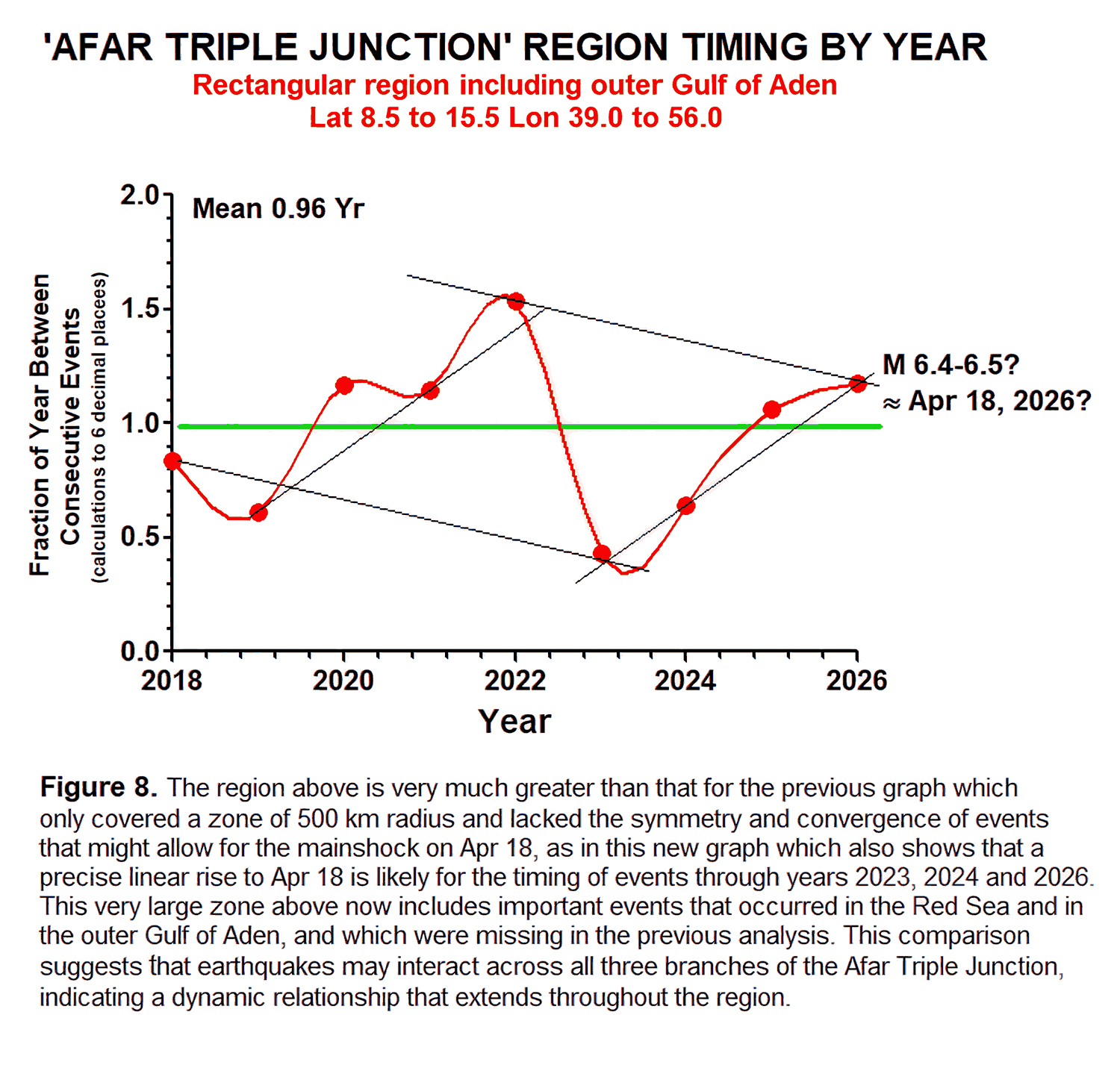
Figure 8.
The Mainshock Yearly Timing Module examines here the occurrence of the largest annual earthquakes across the three arms and surrounding area of the Afar Triple Junction—namely, the East African, Red Sea, and Aden Rifts—within the geographic bounds of latitude 8.5 to 15.5 and longitude 39.0 to 56.0. Unlike the earlier analysis, which focused on a relatively confined 500 km radius, this expanded regional approach captures a more continuous and predictable pattern in the timing between major yearly seismic events. Indeed, the most recent analysis has shown that by extending the study zone by just one degree of longitude, from Lon 55.0 to 56.0, all analytical modules are brought into full alignment and harmony: this finding resulted from the initial poorer alignment of the Mainshock Ratio Module.
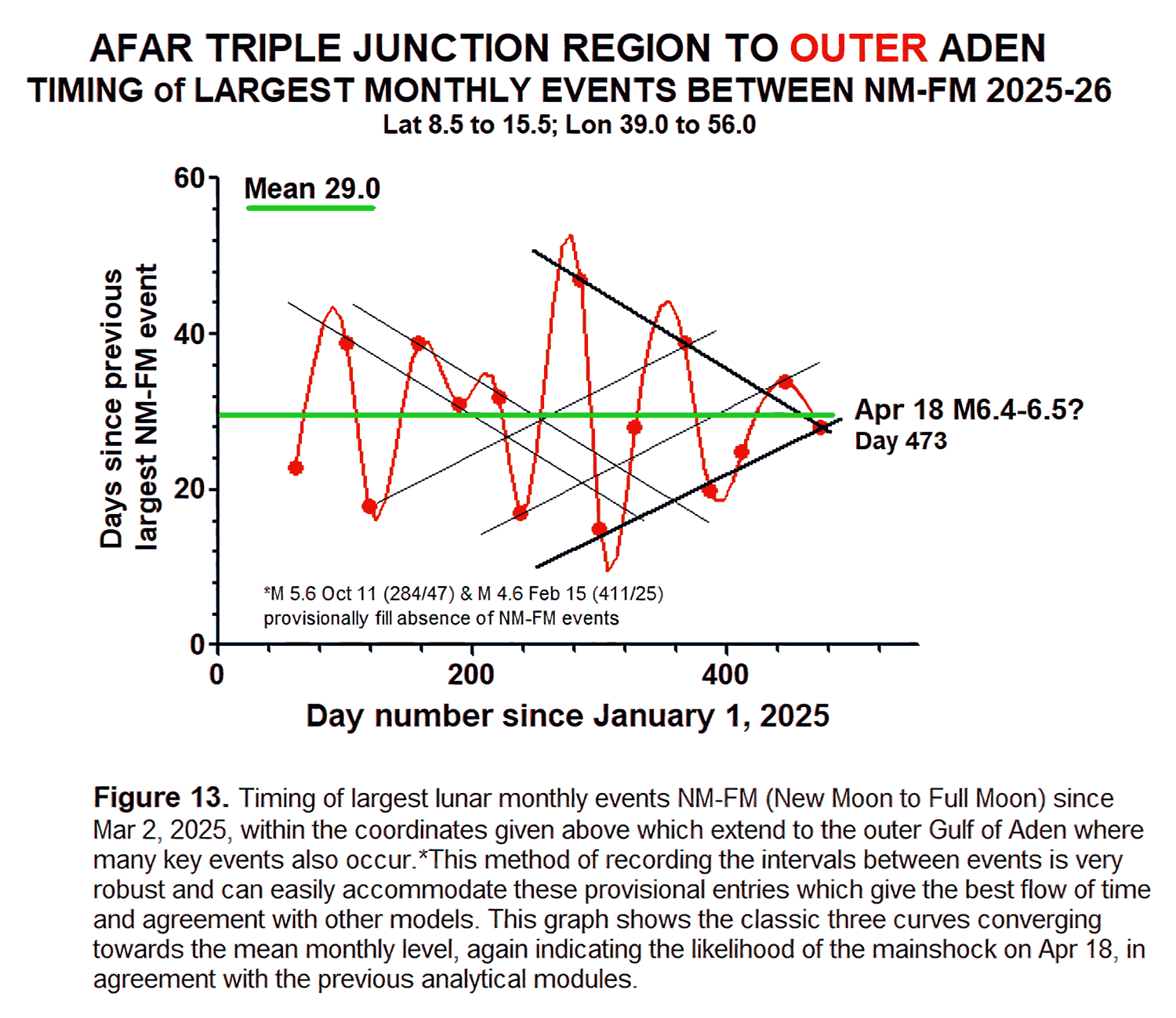
Figure 8 records the interval, in days, between each year's largest earthquake, representing this duration as a fraction of a year (to six decimal places) since the previous major event. These intervals are plotted along the X-axis based on the year the subsequent event occurs, allowing each data point to precisely indicate whether the time elapsed is shorter or longer than a full year since the last significant earthquake. This analytical approach generates curves that fluctuate around an average interval of one year, which in this case is approximately 0.96 years. Over time, these values gradually align, ultimately converging on the projected date of the mainshock, anticipated to occur around April 18, 2026.

Use of Timing Patterns
Understanding Timing Patterns in Earthquake Analysis
1. Interpreting the Flow of Time Between Major Events
The progression of time between the largest seismic events leading up to a mainshock can ideally be represented by three relatively smooth curves, with the middle curve being the most prominent. If this pattern is not observed, it often indicates that the selected search zone includes significant statistical outliers. In such cases, the dataset is not considered 'homogeneous' and lacks the necessary symmetries. To address this, it is advisable to compare the results of both a reduction and an increase in the size of a study zone to ensure finding data that better fits the expected pattern.
These so-called ‘three-curve patterns’ recur throughout the year. Therefore, when a sequence culminates in consecutive large earthquakes occurring approximately one year apart, it should not be automatically assumed that the latest event will be a mainshock. This conclusion is only valid if all other analytical modules support the timing determination.
2. Characteristics of Classical Three-Curve Sets
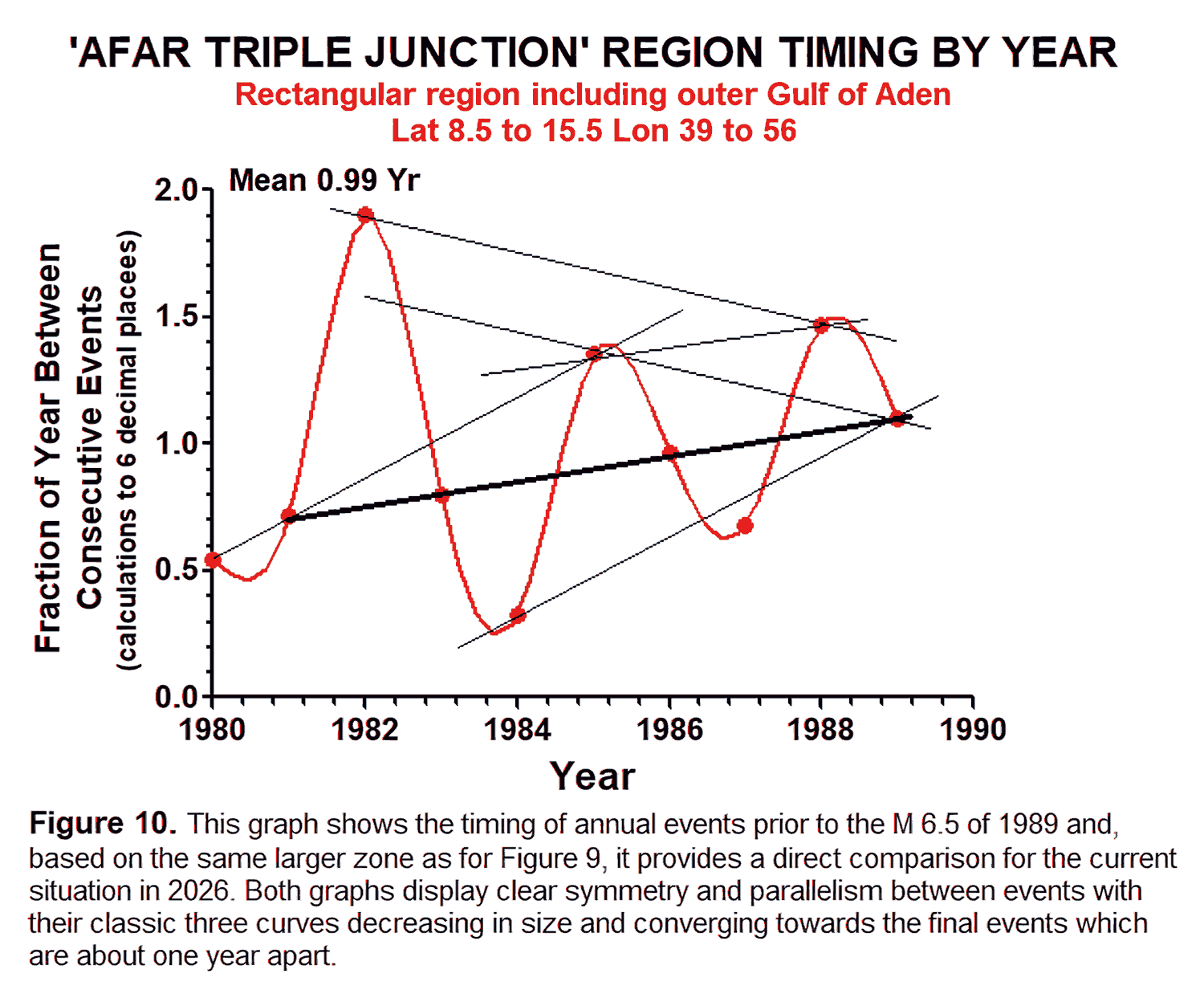
Classical sets of three curves exhibit parallel trends and a connectedness between points, which makes it possible to quantify the timing of events. For accurate analysis, the three curves should extend over a sufficient duration—at least ten months for monthly modules and at least ten years for annual modules, as illustrated in Figure 8. This span is necessary to capture three complete curves within the dataset.
3. Resolution of Timing Intervals
The timing between significant events ultimately resolves to a state of “unity,” meaning that the largest events tend to occur roughly one year apart in annual modules, or one lunar month apart in monthly modules. Based on these patterns and corroborated by other analytical modules, the next mainshock is anticipated in mid-April 2026, which is just over a year since the magnitude 5.9 event on 14 February 2025.
4. Compare the Results of Timing and Magnitude Modules Across Different Time Frames.
To thoroughly evaluate the performance of the timing and magnitude modules, it's essential to examine their outputs over varying periods. By analyzing results across distinct intervals, patterns and trends become more apparent, allowing for a deeper understanding of the data and enhancing the reliability of any conclusions drawn. By employing this comparative method, one can effectively reveal both similarities and differences between the modules, ultimately fostering a more thorough and precise evaluation of the events being analyzed. This strategy is relevant for both yearly and monthly analytical modules, as demonstrated by examples from the greater Afar Triple Junction region. Such a comprehensive approach strengthens the reliability of the findings and enhances the depth of insight gained from the data.
For analyses with yearly modules it is instructive to compare timing of events leading up to past mainshocks (the M6.5 of 1989, Figure 10) with patterns for current events (Figure 8).
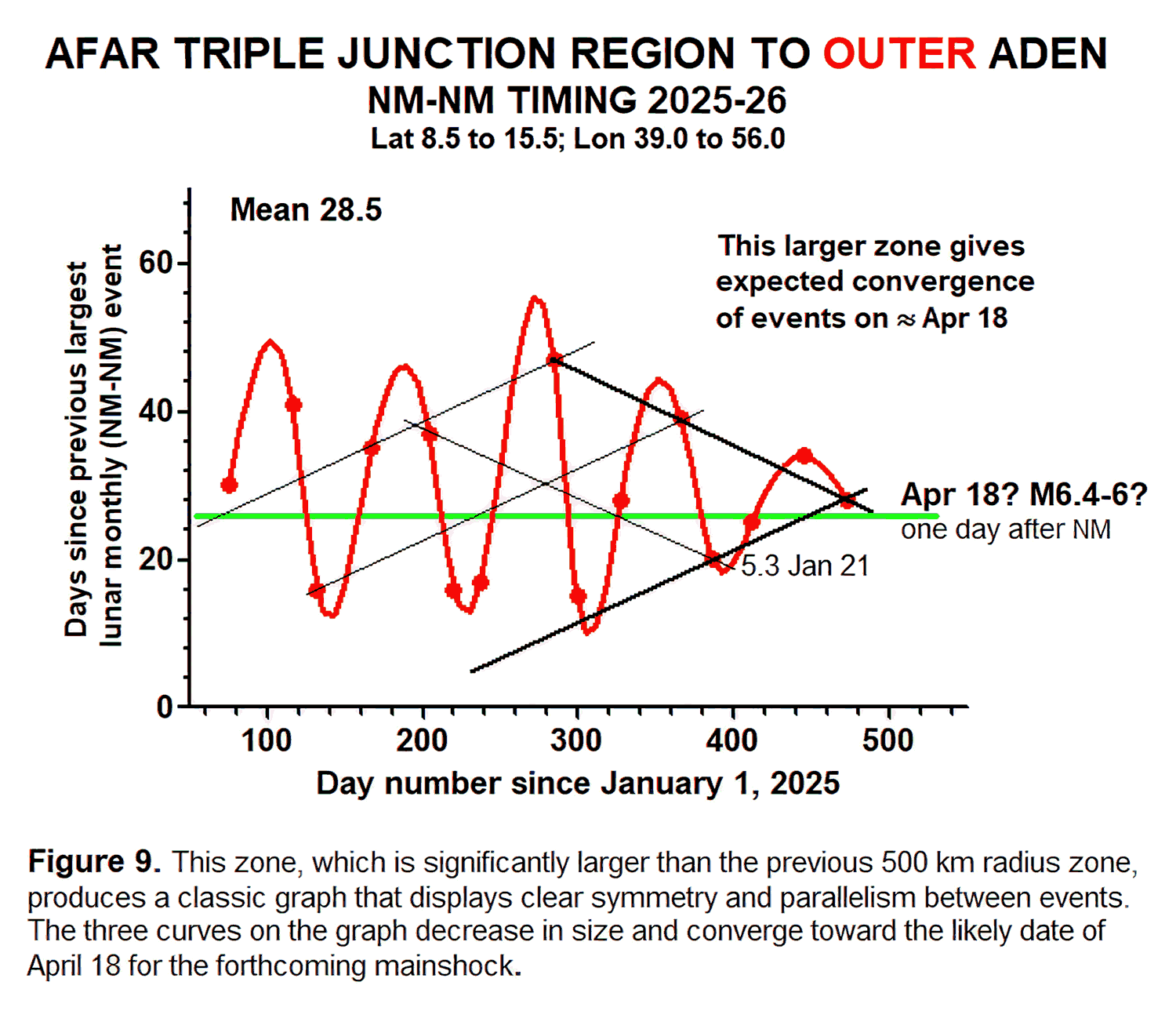
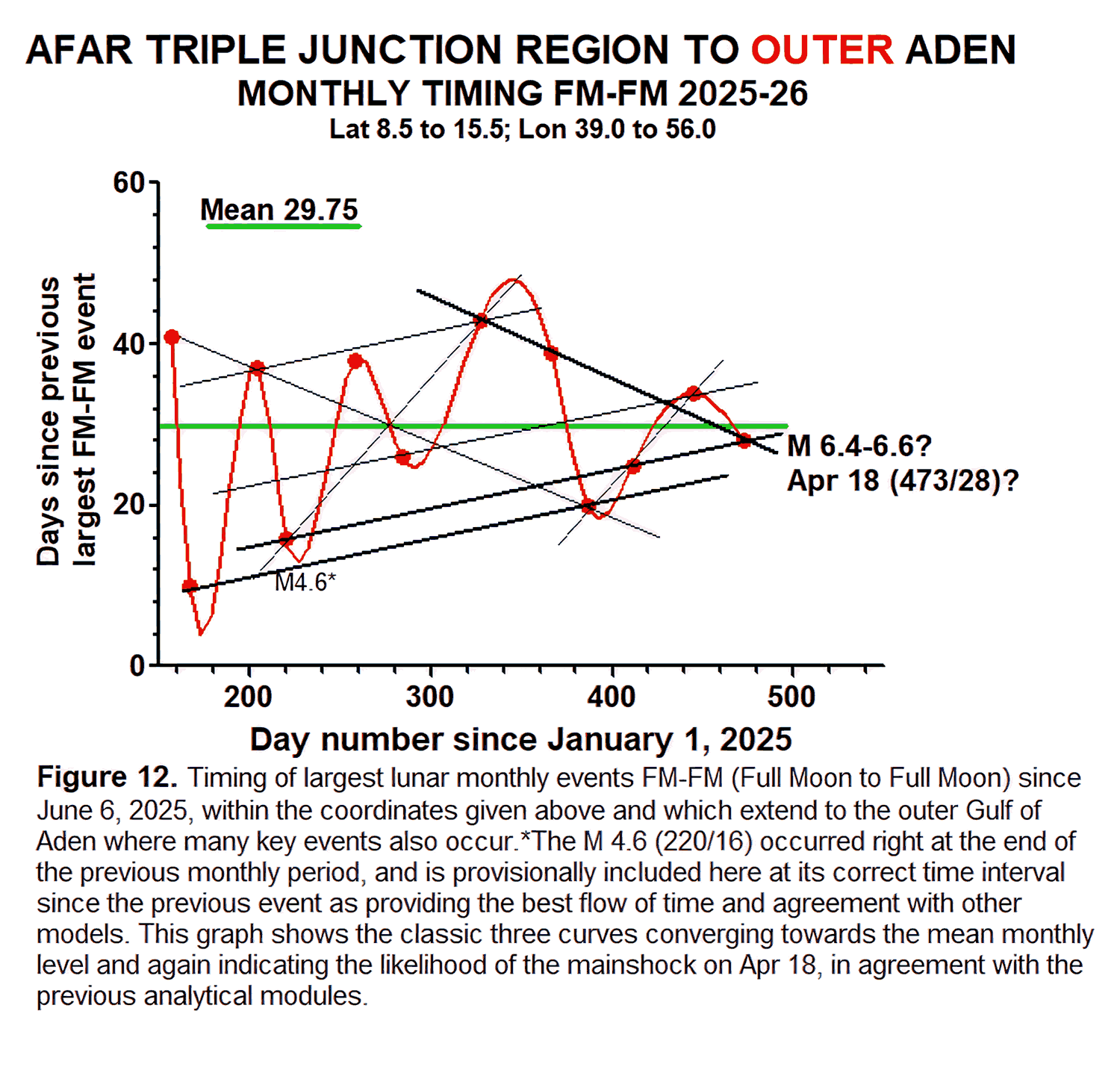
Monthly analyses should compare different periods of the month for the output of timing and associated magnitude modules: namely, New Moon to New Moon (NM-NM) periods (Figures 5, 5b,6, 9) compared with Full Moon to Full Moon (FM-FM) periods (Figures 7 above, 13,14 below), and also with half-month periods of FM to NM and NM to FM (Figures 15, 16 below).
This is an iterative process with feedback between the different modules which aids in determination of the validity and quantification of trends as there must be agreement between at least two to three of the above analytical modules to help avoid a false positive or false negative forecast, but not all four modules will agree: a principal event that is actually going to occur in, say, the New Moon half of the month (NM to FM) will not then be present in the analysis of the Full Moon period (FM to NM). Similarly, the principal event will occur in one but not necessarily both the full lunar monthly periods (NM-NM, and FM-FM).
As a further check on conclusions drawn from all the above, some of the analyses should compare how the study zone's area and placement impact the findings (Figures 1-7 versus 8-16).
'The Calm Before the Storm’
Recent Seismic Activity in the Afar Triangle and Triple Junction
In recent times, the Afar Triangle region and the Triple Junction in the Horn of Africa have experienced very few earthquakes. Despite this relatively quiet period, this research website anticipates the possibility of a magnitude 6.4 to 6.5 earthquake occurring around 18 April 2026. This raises the question: do previous seismic events support the likelihood of such an event occurring now?
Comparison with the 1989 M 6.5 Earthquake
To assess the current situation, it is helpful to compare it with the notable magnitude 6.5 earthquake that occurred in 1989. Several key similarities between that event and the present circumstances have been identified:
Mainshock Magnitude: Both periods involve the expectation or occurrence of a mainshock of similar size, specifically in the M 6.4–6.5 range.
Prolonged Calm: Prior to the mainshock, there was a 'calm' period of 29 days without other significant seismic events, mirroring the current lack of activity.
Lunar Cycle Correlation: There is a pattern of timing between final events that aligns closely with the 29.5-day lunar period.
Magnitude Drop in the Penultimate Year: The year before the mainshock saw a significant decrease in the strength of earthquakes compared to previous years.
Important Note: While these similarities are intriguing, they do not provide conclusive proof regarding the size or timing of any future earthquake. Correlation does not guarantee causation, and caution must be exercised in interpreting these patterns.
Forecasts Based on Revised Modelling
‘More is usually learnt from failures than successes' and, indeed, failure of the previous forecast with no mainshock occurring by about Mar 15 has led to improved understanding and modelling of earthquakes in the Djibouti Triple Junction Region.
Firstly, the definite need to compare modelling outcomes from zones of greatly different areas, including the entire region (Figs. 8-10).
Secondly, be aware of unexpected quakes of lower magnitude that can occur late in a sequence just prior to a mainshock thereby making an earlier forecast invalid, as illustrated in Figures 5-5b.
Drawing on the revised modelling above, the following forecast is provided:
A magnitude 6.4–6.5 earthquake is anticipated to occur around 18 April 2026.


Latest Update April 16, 2026
Sources: The Afar Triangle:
- www.researchgate.net, www.volcanocafe.org, Afar Triangle -
Wikipedia and USGS Earthquake Catalogue, Google Earth Pro.
**Data were analysed with a spline curve generated using GraphPad Prism version 5.01 for Windows, GraphPad Software, San Diego, California USA, https://www.graphpad.com