The Triangular Analytical Module
An Overview of Methodology and Acknowledgements
The Triangular Analytical Module Explained
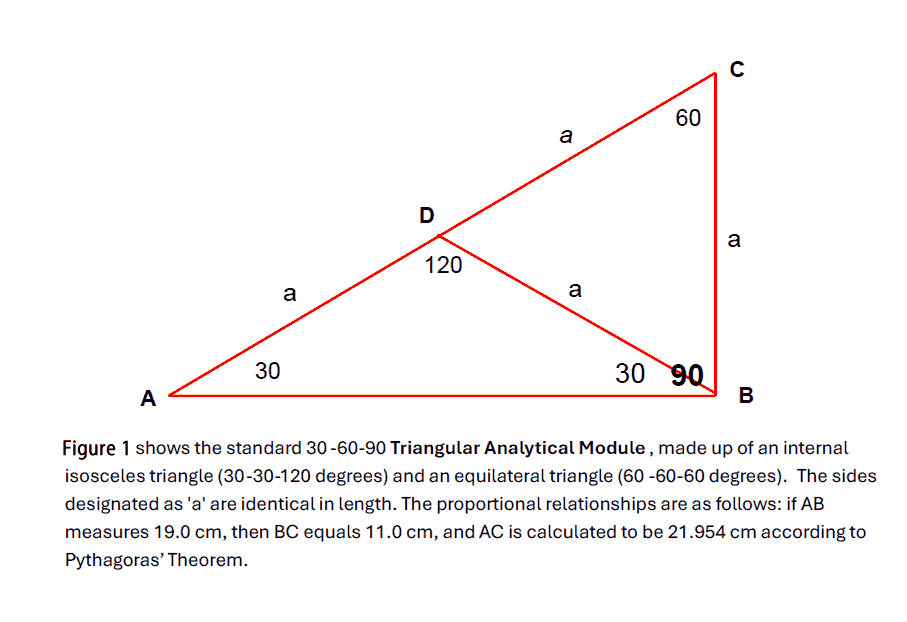
The Triangular Analytical Module (Figure 1, above)
The Triangular Analytical Module illustrates proportional and angular relationships among the magnitudes of significant annual or monthly events preceding a mainshock at point C. The slope of line AB denotes the typical reduction in the largest yearly magnitudes prior to a mainshock, followed by a sharp perpendicular increase signified by BC. This sudden escalation occurs within one or two years for annual data. The 90-degree angle between AB and BC is considered paramount and constitutes the principal justification for presenting this module, as depicted in Figures 1, 1b, and 7 of the Djibouti & “Afar Triangle” webpage.
It should be noted that BC is designated as ‘fixed’, and the estimated position of the final event at C is determined by the author through separate analytical modules. The Triangular Module operates in conjunction with results from the author’s yearly and monthly Timing Analytical Modules, ensuring cross-validation and consistency. These interdependent modelling approaches, together with the Mainshock Analytical Module, are employed to facilitate practical forecasting outcomes in all examples featured on the website, which aims to advance and access prospective forecasting methodologies.
Importantly, if the Triangular Module appears to fit a data set, it does not definitively confirm that a mainshock will occur at its apex, which indicates a specific magnitude and anticipated time of occurrence. Conversely, if the model fails to fit the dataset, the forecast is deemed incorrect. This conclusion applies to retrospectively tested events, and ongoing evaluation is being conducted for prospective applications.
Acknowledgement
The author, Reg. Roberts, wishes to acknowledge the profound contribution of his son Wayne Roberts’ work, ‘Principles of Nature’ (2003), which drew attention to the highly resonant angles of 30, 60, 90, and 120 degrees. These angles are recognised as significant across various disciplines in the natural and physical world.